Rummy Card Values and Points Calculation: Complete Guide
September 26, 2026 · All Rummy APK
Understanding rummy card values and points calculation helps players learn how scoring works in Indian Rummy. Each card has a point value, but the penalty generally depends on the cards left unmatched when another player makes a valid declaration.
This guide explains rummy card points, face-card values, Ace and joker points, unmatched cards, and step-by-step scoring examples.
Rummy Card Values: Points Table
In a common 13-card Indian Rummy scoring system, cards have the following point values:
| Card | Point value |
|---|---|
| Ace (A) | 10 points |
| King (K) | 10 points |
| Queen (Q) | 10 points |
| Jack (J) | 10 points |
| 10 | 10 points |
| 9 | 9 points |
| 8 | 8 points |
| 7 | 7 points |
| 6 | 6 points |
| 5 | 5 points |
| 4 | 4 points |
| 3 | 3 points |
| 2 | 2 points |
| Printed Joker | 0 points |
| Wild Joker | 0 points |
These values describe a common Indian Rummy scoring format. Other rummy variations may use different rules, so check the specific game's scoring system.
How Are Points Calculated in Rummy?
In a common 13-card Indian Rummy format, players try to arrange their cards into valid sequences and sets. When a player makes a valid declaration, the other players' penalty points are generally calculated from their unmatched cards.
The basic process is:
- Identify valid sequences and sets in your hand.
- Check whether the hand meets the declaration requirements, including the required pure sequence.
- Identify cards that are not part of valid combinations.
- Add the point values of the cards that count as unmatched.
- Apply the game's scoring rules, including any maximum penalty or drop-related rules.
The player who makes a valid declaration generally receives zero penalty points for that round. The other players' scores depend on their remaining cards and the rules of the format.
What Are Unmatched Cards in Rummy?
Unmatched cards are cards that cannot be included in valid combinations under the applicable rules. Their values may count toward a player's penalty score.
For example, suppose your unmatched cards are:
- 8♠ = 8 points
- K♥ = 10 points
- 4♦ = 4 points
The total is:
8 + 10 + 4 = 22 points
Your unmatched-card total would be 22 points before applying any format-specific scoring rules or caps.
Cards included in valid combinations generally do not add to the penalty total when the scoring conditions are met. However, failing to meet a required pure-sequence or declaration condition can change how the hand is scored.
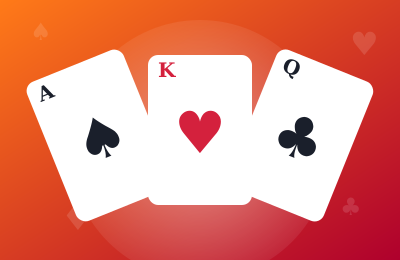
How Many Points Are Ace, King, Queen and Jack in Rummy?
In common Indian Rummy scoring:
- Ace = 10 points
- King = 10 points
- Queen = 10 points
- Jack = 10 points
Although an Ace can be used as a low or high card in certain sequences, its point value for scoring is commonly 10 in Indian Rummy.
For example, A♠, 2♠, 3♠ may form a valid sequence if permitted by the game's rules. The Ace's scoring value does not change simply because it is used at the beginning of a sequence.
How Many Points Does a Joker Have in Rummy?
Printed jokers and wild jokers commonly carry zero penalty points in Indian Rummy.
Jokers can substitute for eligible missing cards in combinations, subject to the rules of the game. A joker does not automatically make a hand valid: players must still satisfy the required sequence and declaration conditions.
For example, if your unmatched cards include a 7♣ and a printed joker, the joker commonly adds zero points. The 7♣ may count as 7 penalty points if it remains unmatched.
Rummy Points Calculation: Examples
Example 1: Calculating Unmatched Cards
Suppose the cards that count toward your penalty are:
- 9♥ = 9 points
- Q♣ = 10 points
- 5♦ = 5 points
- 2♠ = 2 points
Total penalty:
9 + 10 + 5 + 2 = 26 points
This is the unmatched-card total before any applicable cap or special scoring rule.
Example 2: Unmatched Cards With a Joker
Suppose the unmatched cards are:
- K♠ = 10 points
- 6♦ = 6 points
- Printed Joker = 0 points
Total penalty:
10 + 6 + 0 = 16 points
The joker contributes zero points under the common scoring system, but the other unmatched cards still count.
Example 3: Valid Combinations and Unmatched Cards
Suppose your hand contains these combinations:
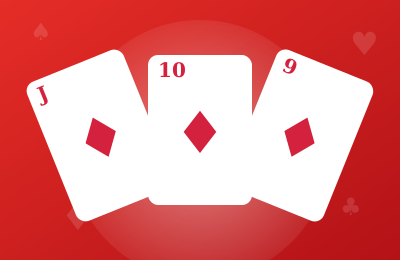
- 4♥, 5♥, 6♥ — valid sequence
- 8♠, 8♦, 8♣ — valid set
- K♦, 7♣, 3♠ — unmatched cards
The unmatched-card total is:
10 + 7 + 3 = 20 points
This example assumes the hand meets the applicable requirements for those combinations to be excluded from the penalty calculation. If the hand fails a required declaration condition, scoring may differ.
What Is the Maximum Points Limit in Rummy?
Some Indian Rummy formats apply a maximum penalty-point limit to a losing hand. The exact cap depends on the game format and its rules.
Do not assume that every rummy app uses the same maximum score, drop penalty, or calculation method. Read the scoring information provided by the specific game before playing.
Does a Pure Sequence Affect Rummy Points Calculation?
Yes. In common Indian Rummy formats, a valid declaration requires at least two sequences, including at least one pure sequence. A pure sequence contains consecutive cards of the same suit without using a joker as a substitute.
If a player fails to meet the required pure-sequence or declaration conditions, the hand may receive a higher penalty under the applicable rules.
For this reason, points calculation is not just about adding card values. You must also understand which combinations qualify under the game's declaration rules.
Indian Rummy vs Gin Rummy: Card Values
Indian Rummy and Gin Rummy use different scoring systems.
| Card | Common Indian Rummy | Standard Gin Rummy |
|---|---|---|
| Ace | 10 points | 1 point |
| 2–9 | Face value | Face value |
| 10 | 10 points | 10 points |
| Jack, Queen, King | 10 points each | 10 points each |
| Joker | Usually 0 points | Usually not used |
In standard Gin Rummy, unmatched cards are called deadwood. Players generally aim to reduce their deadwood total, and the Ace usually counts as one point.
Always identify the rummy variation before applying a scoring chart.
Frequently Asked Questions About Rummy Card Points
How many points is an Ace in Indian Rummy?
In a common Indian Rummy scoring system, an Ace is worth 10 points. Its sequence position does not normally change this scoring value.
How many points are face cards worth?
King, Queen, and Jack are commonly worth 10 points each in Indian Rummy.
Do jokers carry points in rummy?
Printed and wild jokers commonly carry zero penalty points in Indian Rummy, subject to the specific game's rules.
How do I calculate my rummy penalty points?
Identify the cards that count as unmatched under the applicable scoring rules, add their point values, and apply any relevant penalty cap or special rule.
Does the winner receive points in Indian Rummy?
In many points-based Indian Rummy formats, a player who makes a valid declaration receives zero penalty points for that round. The other players' scores are calculated according to the game rules.
Are Indian Rummy and Gin Rummy card values the same?
No. A key difference is that an Ace commonly counts as 10 points in Indian Rummy but as 1 point in standard Gin Rummy.
Conclusion
Learning rummy card values and points calculation makes it easier to understand how unmatched cards affect a score. In common Indian Rummy, numbered cards generally carry their face value, Aces and face cards carry 10 points, and jokers carry zero penalty points.
However, the final score also depends on valid combinations, declaration requirements, and the scoring rules of the specific game.
Disclaimer: This guide provides general educational information. Rummy rules and scoring systems can vary by format and platform. Always check the applicable game rules before participating in online gaming.
Popular rules searches
Apps to try
 NEW✦✦✦
 NEW✦✦✦
18+ only. Real-money games carry a risk of financial loss. See all apps.