Gin Rummy and 21-Card Rummy Rules: How to Play and Key Differences
September 30, 2026 · All Rummy APK
Gin Rummy and 21-Card Rummy are two different variations of rummy. Both involve arranging cards into valid combinations, but they differ in the number of cards dealt, gameplay, joker rules, and scoring.
If you are learning rummy card games for the first time, this guide explains the basic rules of Gin Rummy and 21-Card Rummy, including sets, sequences, jokers, scoring, and common terms.
What Is Gin Rummy?
Gin Rummy is a two-player card game in which the objective is to form sets and runs while reducing the value of unmatched cards, commonly called deadwood.
A standard Gin Rummy game usually uses a 52-card deck without jokers. Each player receives 10 cards, and players draw and discard cards to improve their hands.
Basic Gin Rummy Rules
- Deal: Each player receives 10 cards.
- Draw: On a turn, a player takes a card from the stock pile or the discard pile, according to the rules.
- Form combinations: Arrange cards into valid sets and runs.
- Discard: Discard one card at the end of a normal turn.
- Knock: In standard Gin Rummy, a player may knock when their deadwood total is 10 points or less.
- Gin: If all 10 cards form valid combinations, the player has achieved Gin.
- Scoring: Points are calculated using unmatched cards and the applicable bonuses.
Specific scoring bonuses and some gameplay details can vary by Gin Rummy version.
Sets and Runs in Gin Rummy
A set contains three or four cards of the same rank.
Example: 7♠, 7♥, 7♦
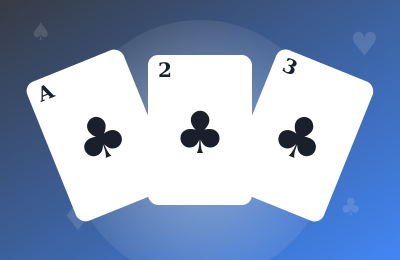
A run contains three or more consecutive cards of the same suit.
Example: 4♣, 5♣, 6♣
Cards that do not form part of a valid combination are called deadwood. In standard Gin Rummy, numbered cards generally count at face value, Aces count as one point, and face cards count as 10 points each.
How Gin Rummy Scoring Works
The player who knocks reveals their combinations and unmatched cards. The opponent may be allowed to add eligible unmatched cards to the knocker's combinations, a process called laying off.
If the knocker has less deadwood than the opponent after the relevant comparison, the knocker generally scores the difference. If the opponent has an equal or lower deadwood total, an undercut may occur and the opponent scores under the applicable rules.
A Gin hand receives a bonus in standard scoring formats. Bonus amounts vary by version, so check the rules of the game being played.
What Is 21-Card Rummy?
21-Card Rummy is a longer Indian Rummy variation in which each player receives 21 cards. Players arrange their cards into valid combinations and try to meet the declaration requirements of the particular format.
Compared with 13-card Indian Rummy, the larger hand creates more possible combinations and additional decisions about sequences, sets, and jokers.
Basic 21-Card Rummy Rules
- Deal: Each player receives 21 cards.
- Draw and discard: Players draw and discard according to the game format.
- Arrange combinations: Build valid sequences and sets from the cards in hand.
- Understand jokers: The game may include printed jokers and additional wild cards, depending on its rules.
- Check declaration requirements: A valid declaration must meet the particular format's sequence, grouping, or special-hand requirements.
- Calculate the result: Scoring and penalties are determined by the applicable rules.
The number of decks, available joker types, and valid declaration patterns may vary. Always read the rules shown by the specific game before playing.
Sequences and Sets in 21-Card Rummy
A sequence is a group of consecutive cards of the same suit.
Example: 5♥, 6♥, 7♥
A set is a group of cards of the same rank in different suits, subject to the game's rules.
Example: 9♠, 9♥, 9♦
Many 21-Card Rummy formats require multiple pure sequences or provide additional declaration patterns. Some formats also recognise special combinations such as tunnels or dublees. These terms and their exact requirements are format-specific, so verify them before relying on a particular declaration method.
How Jokers Work in 21-Card Rummy
Jokers can help complete eligible combinations. Depending on the format, players may encounter printed jokers, a cut joker, or other designated wild cards.
A joker generally substitutes for a missing card in an eligible combination, but the rules may restrict where and how it can be used. Do not assume that the joker rules in 21-Card Rummy are identical to those in Gin Rummy or 13-card Indian Rummy.
Gin Rummy vs 21-Card Rummy: Key Differences
| Feature | Gin Rummy | 21-Card Rummy |
|---|---|---|
| Common number of players | 2 | Depends on the format |
| Cards dealt to each player | Usually 10 | 21 |
| Common deck setup | 52 cards without jokers | Deck and joker setup vary |
| Main objective | Form sets and runs while reducing deadwood | Form valid combinations and meet declaration requirements |
| Joker use | Usually no jokers in standard Gin Rummy | Jokers or wild cards may be used |
| Important terms | Deadwood, knock, Gin, undercut | Pure sequences, jokers, and format-specific declarations |
| Scoring | Deadwood totals and bonuses | Format-specific points and penalties |
This comparison describes common versions; the rules of a particular app or table may differ.
Tips for Beginners Learning Rummy Rules
- Learn the basic rules before starting a new variation.
- Understand the difference between a set and a sequence.
- Check how many cards are dealt in the chosen game.
- Review the joker rules and valid declaration requirements.
- Learn how scoring works before making decisions based on card values.
- Do not assume that a strategy or rule from one rummy variation automatically applies to another.
Frequently Asked Questions
How many cards are dealt in Gin Rummy?
In standard Gin Rummy, each of the two players receives 10 cards.
How many cards are dealt in 21-Card Rummy?
Each player receives 21 cards in the common 21-Card Rummy format.
Is Gin Rummy the same as Indian Rummy?
No. Gin Rummy and Indian Rummy have different dealing rules, gameplay, declaration requirements, and scoring systems.
Does Gin Rummy use jokers?
Standard Gin Rummy is commonly played with a 52-card deck without jokers. Other variants may use different rules.
Are jokers used in 21-Card Rummy?
Many 21-Card Rummy formats use printed jokers and designated wild cards. The exact setup depends on the version.
What is deadwood in Gin Rummy?
Deadwood refers to cards that are not included in valid sets or runs. Their point values affect scoring.
Are 21-Card Rummy declaration rules always the same?
No. Declaration patterns, joker rules, and scoring can differ between formats. Check the rules of the specific game.
Conclusion
Gin Rummy and 21-Card Rummy both involve arranging cards into combinations, but their dealing rules, use of jokers, declaration requirements, and scoring systems are different. Understanding these differences helps beginners learn the correct rules for the variation they want to play.
Disclaimer: This article provides general educational information about card-game rules. Rules can vary by variation and platform. Check the specific game rules and applicable local laws before participating in online gaming.
Popular rules searches
Apps to try
 NEW✦✦✦
 NEW✦✦✦
18+ only. Real-money games carry a risk of financial loss. See all apps.