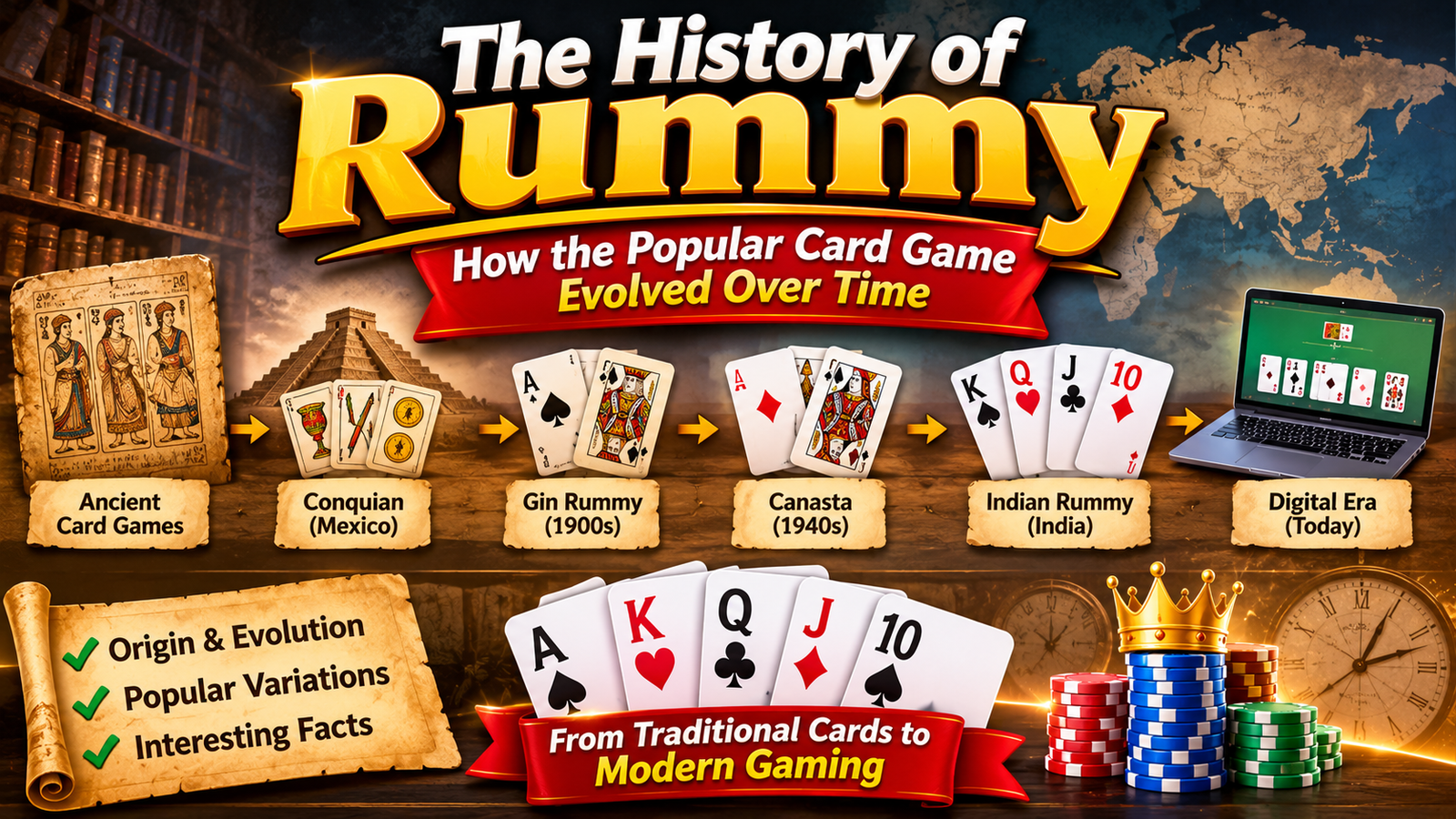
Rummy duniya ke popular card games mein se ek hai, jise different countries mein alag-alag rules aur playing styles ke saath khela jaata hai. Aaj Rummy ke multiple variations available hain, jaise Indian Rummy, Gin Rummy, Rummy 500, Canasta aur 13 Card Rummy. Lekin kya aapne kabhi socha hai ki Rummy ki shuruaat kab hui thi aur ye card game itna popular kaise bana?
Rummy ki history kaafi interesting hai. Iske roots ko lekar different historical theories milti hain, jinmein Mexico, China aur purane card-matching games ka mention hota hai. Time ke saath Rummy ne different countries aur cultures mein naye formats develop kiye aur traditional card tables se digital gaming platforms tak apni journey complete ki.
Is article mein hum Rummy card game ki history, possible origin, Conquian se connection, Gin Rummy ka development, India mein 13 Card Rummy ki popularity aur modern digital era tak ke evolution ko detail mein samjhenge.
What Is the History of Rummy?
Rummy ek family of card games hai jisme players cards ko matching groups, sets aur sequences mein arrange karte hain. Is game ka basic gameplay draw, discard aur card combinations banane par based hota hai.
Rummy ki exact origin date aur original inventor ko confidently identify karna difficult hai. Historical card-game references mein 19th century ke Conquian ko modern Rummy family ka important predecessor maana jaata hai.
Rummy ke early versions mein players ko cards collect karne, matching combinations banane aur unwanted cards discard karne hote the. Ye basic concept baad mein different Rummy variations ka foundation bana.
Aaj Rummy sirf ek country tak limited nahi hai. India, America, Europe aur other regions mein iske different versions popular rahe hain.
Where Did Rummy Originate?
Rummy ki origin ko lekar mainly two historical theories discuss ki jaati hain.
1. Mexican Connection – Conquian
Rummy ke historical development mein Conquian ka important role maana jaata hai.
Conquian ek traditional card game hai jo Mexico aur nearby regions mein popular tha. Is game mein players cards draw aur meld karke specific combinations banate the.
Historical references ke according, Conquian ko 1887 mein New York ki card-game publication The Standard Hoyle mein Coon Can naam se briefly describe kiya gaya tha. Later, 1897 mein R. F. Foster ki book Foster’s Complete Hoyle mein Conquian ka more detailed description publish hua.
Conquian mein use hone wala 40-card Spanish deck aur card-melding system modern Rummy ke development ko samajhne ke liye important historical clues provide karte hain.
2. Chinese Connection – Mahjong Influence
Rummy ke origin se related ek aur theory Chinese card games aur Mahjong traditions ke possible influence ko discuss karti hai.
Kuch historians draw-and-discard gameplay aur matching combinations ke similarities ko Chinese games ke saath connect karte hain.
Mahjong mein bhi players matching tiles aur combinations collect karte hain. Is similarity ki wajah se Rummy ke development mein Asian influence ki possibility discuss ki jaati hai.
However, Chinese games se modern Rummy tak ek direct, fully documented historical connection establish nahi hua hai.
Isliye Rummy ki origin ko explain karte waqt Conquian ke documented historical references aur possible Asian influence ko separate rakhna important hai.
How Did the Name Rummy Originate?
Rummy naam ki origin ko lekar bhi different explanations milti hain.
Ek popular explanation ke according, Rummy ka connection old card game Rum Poker se ho sakta hai. Early 20th century mein Rum aur Rummy jaise names card-game literature mein appear hone lage.
Kuch accounts game ke naam ko alcoholic drink Rum ke saath connect karte hain, jabki others British slang word Rum, meaning unusual or strange, ka reference dete hain.
Lekin exact naming history completely established nahi hai.
Time ke saath Rummy word ek individual game ke bajaye different draw-and-discard card games ki poori family ke liye use hone laga.
Evolution of Rummy Through Different Historical Periods
Rummy ka development ek single event se nahi hua. Different card games, playing styles aur regional preferences ne milkar iske modern formats ko shape kiya.
1. Late 19th Century – Early Rummy Foundations
19th century ke final decades mein Conquian jaise card games ke written descriptions milne lage.
Ye games modern Rummy ke basic concepts se related the:
- Cards draw karna.
- Unwanted cards discard karna.
- Matching cards collect karna.
- Valid combinations create karna.
- Required combinations complete hone par round finish karna.
1887 aur 1897 ke historical references Conquian ke development ko understand karne ke liye important milestones hain.
2. Early 20th Century – Rummy Becomes a Recognized Card Game
20th century ke beginning mein Rummy aur Rum Poker jaise card-game names written references mein increasingly appear hone lage.
Is period mein existing card-melding games ke different versions develop hue. Players aur card-game communities ne apne preferred rules ke according new variations create ki.
Isi period mein Gin Rummy ka development bhi hua, jisne Rummy family ko ek naya direction diya.
3. 1930s – Rummy Gains More Popularity
1930s mein Rummy aur uske variations ko wider recognition milne lagi.
Is period mein Gin Rummy, Contract Rummy aur other variations ka development aur popularity badhi.
Economic conditions ne bhi card games ko home entertainment ke roop mein popular banane mein role play kiya. Log relatively simple aur accessible indoor activities ko prefer karne lage.
Gin Rummy ki simple structure aur strategic gameplay ne ise two-player card game ke roop mein popular banaya.
4. 1940s – Gin Rummy and Canasta Craze
1940s Rummy history ka important period tha.
Gin Rummy America mein highly popular hua aur Hollywood film industry ke actors aur entertainment personalities ke beech bhi famous raha.
Isi period mein Canasta ka development Uruguay mein hua. Canasta ne Rummy family mein partnership-based gameplay aur seven-card combinations jaise concepts ko popular banaya.
Canasta ka influence South America se United States aur other countries tak spread hua.
5. 1950s – International Growth of Rummy Variations
1950s tak Rummy ke different variations ko international recognition mil chuki thi.
Canasta ki popularity bhi kaafi badhi aur uske multiple variations develop hue.
Players ke interests aur regional preferences ke according Rummy ke rules modify hote rahe.
Is period tak Rummy ek simple card game se badhkar different playing formats aur scoring systems wali game family ban chuka tha.
How Did Gin Rummy Change the History of Rummy?
Gin Rummy Rummy family ke most influential variations mein se ek hai.
Historical accounts commonly Gin Rummy ke development ko Elwood T. Baker aur unke son C. Graham Baker ke saath around 1909–1911 associate karte hain. Lekin is invention story ke exact details par historical documentation limited hai.
Gin Rummy ko early 20th century mein New York ke card-playing circles mein recognition mili.
Important Features of Gin Rummy
- Generally two players participate karte hain.
- Standard 52-card deck use hota hai.
- Each player ko 10 cards milte hain.
- Players sets aur sequences create karte hain.
- Unmatched cards ko Deadwood kaha jaata hai.
- Players Knock ya Gin declare karke round finish kar sakte hain, according to the rules.
Hollywood and Gin Rummy Popularity
1940s mein Hollywood ke actors aur entertainment industry ke logon ke beech Gin Rummy kaafi popular hua.
Film sets par actors ke free time mein card games khelna common tha. Gin Rummy ka short gameplay aur easy setup ise entertainment industry ke liye suitable banata tha.
Media coverage aur celebrity interest ne bhi game ki popularity ko wider audience tak pahunchaya.
Development of Canasta and Other Rummy Variations
Rummy ki history mein Canasta, Rummy 500 aur Contract Rummy ka bhi important contribution raha hai.
1. Canasta
Canasta ka development 1940s mein Uruguay mein hua. Ye partnership-based card game ke roop mein popular hua.
Ismein players matching ranks ke cards ko groups mein arrange karte hain. Seven-card meld ko Canasta kaha jaata hai.
Canasta ne Rummy family mein team-based gameplay ko international recognition dilayi.
2. Rummy 500
Rummy 500, jise 500 Rum bhi kaha jaata hai, ek points-based variation hai.
Is game mein players valid combinations table par place karte hain aur melded cards ke according points collect karte hain.
Is format ne Rummy ke traditional draw-and-discard gameplay ko ek different scoring structure diya.
3. Contract Rummy
Contract Rummy mein har round ke liye specific card combinations required hote hain.
Players ko different rounds mein different contracts complete karne padte hain. Is wajah se har round ka gameplay slightly different ho sakta hai.
Ye format Rummy ke strategic aur combination-based nature ko aur interesting banata hai.
History of Indian Rummy – How Did It Become Popular in India?
Indian Rummy India mein widely played card-game variations mein se ek hai. Iska popular format 13 Card Rummy ke naam se jaana jaata hai.
Indian Rummy ki exact origin date aur development ka complete historical record available nahi hai. Lekin isse wider Rummy family ka regional variation maana jaata hai.
India mein traditional card games ki apni rich history rahi hai. Mughal period mein Ganjifa jaise card games popular the, jinke different regional versions India mein develop hue.
However, Ganjifa aur modern Indian Rummy ke beech direct historical connection established nahi hai. Dono ko Indian card-game history ke separate parts ke roop mein samajhna better hai.
13 Card Rummy and Its Indian Identity
Indian Rummy ka popular 13-card format kuch unique rules ke saath play kiya jaata hai.
Ismein:
- Har player ko 13 cards milte hain.
- Players sequences aur sets create karte hain.
- Minimum two sequences required hoti hain.
- At least one Pure Sequence compulsory hoti hai.
- Printed aur wild jokers ka use applicable rules ke according hota hai.
India mein is game ko kuch regions mein Paplu ke naam se bhi jaana jaata hai.
Why Did Indian Rummy Become Popular?
Indian Rummy ki popularity ke peeche kuch important reasons rahe hain.
Family Entertainment: Rummy family gatherings aur social occasions par entertainment ka ek common option bana.
Simple Gameplay: Basic rules understand karne ke baad beginners bhi card combinations aur gameplay follow kar sakte hain.
Regional Variations: Different regions mein players ne apne preferred rules aur playing styles develop kiye.
Festival Traditions: Diwali aur other family gatherings ke time traditional card games ko social entertainment ke roop mein play karne ki practice ne bhi Rummy ko cultural visibility di.
Group Participation: 13 Card Rummy mein multiple players participate kar sakte hain, jisse group-based card gameplay possible hota hai.
How Did Rummy Move from Traditional Cards to Digital Gaming?
Technology ke development ke saath Rummy ki playing experience mein bhi changes aaye.
Pehle Rummy mainly physical cards aur face-to-face gameplay ke through enjoy kiya jaata tha. Lekin computers, internet aur smartphones ke development ne card games ko digital platforms tak pahunchaya.
1. Computer-Based Card Games
Early digital gaming period mein card games computer software ke through available hone lage.
Players physical cards ke bina computer ke against different card games play kar sakte the.
Is development ne traditional card games ko digital format mein convert karne ka foundation prepare kiya.
2. Internet-Based Gaming Platforms
Internet connectivity improve hone ke baad multiplayer card games ko online environment mein introduce kiya gaya.
Players different locations se connect hokar digital tables par card games experience kar sakte the.
Online gameplay ne traditional card games ko geographically accessible banane mein important role play kiya.
3. Smartphone and Mobile Gaming
Smartphones ke widespread use ne digital card games ko aur accessible banaya.
Mobile devices par Rummy-style games ke graphical interfaces, automatic card sorting aur digital scoring jaise features introduce hue.
Isse traditional card-game experience ko digital interface ke through present karna possible hua.
4. Modern Digital Features
Modern card-game software mein different technical features available ho sakte hain:
- Digital card distribution.
- Automatic score calculation.
- User-friendly game interfaces.
- Practice and tutorial modes.
- Multiplayer connectivity.
- Game history and statistics.
- Rule explanations and help sections.
Ye features digital card games ko understand aur navigate karna easier bana sakte hain.
Important: Digital Rummy ka development traditional card-game history se related hai, lekin online gaming services ke legal rules alag subject hain.
Traditional Rummy vs Modern Digital Rummy
Traditional aur digital Rummy ke basic card combinations similar ho sakte hain, lekin playing experience mein differences hote hain.
| Feature | Traditional Rummy | Digital Rummy |
|---|---|---|
| Playing Method | Physical cards | Digital interface |
| Card Distribution | Manual | Software-based |
| Score Calculation | Manual | Often automatic |
| Player Interaction | Face-to-face | Online connectivity |
| Card Arrangement | Manual | May include sorting tools |
| Learning | Through other players | Tutorials and guides |
Digital formats mein features platform aur game version ke according vary kar sakte hain.
Important Milestones in Rummy History
Rummy ke historical development ko ek timeline mein samajhna easy hai.
| Historical Period | Important Development |
|---|---|
| 1887 | Coon Can ka published reference |
| 1897 | Conquian ka detailed description |
| Early 1900s | Rummy aur Rum Poker references |
| Around 1909–1911 | Gin Rummy ka attributed development |
| 1930s | Gin aur Contract Rummy variations ka growth |
| 1940s | Gin Rummy popularity aur Canasta development |
| 1950s | Different Rummy variations ka international expansion |
| Late 20th Century | Computer-based card games ka development |
| Modern Era | Internet aur mobile-based card gaming |
Ye timeline available historical references aur major developments ka overview hai. Har variation ki exact invention date equally well documented nahi hai.
Why Is Rummy Still Popular Today?
Rummy ki long history ke bawajood ye card-game family aaj bhi different countries mein popular hai.
Iski popularity ke kuch important reasons hain.
1. Easy to Understand Rules
Rummy ke basic concepts, jaise card matching, sets aur sequences, relatively simple hain. Isliye beginners basic gameplay ko step by step learn kar sakte hain.
2. Different Game Variations
Rummy ke multiple formats available hain. Players different card distributions, scoring methods aur rules ko explore kar sakte hain.
3. Social Entertainment
Traditional Rummy family gatherings aur social card-game sessions ka part raha hai.
4. Strategic Gameplay
Cards ko observe karna, combinations identify karna aur available options ko understand karna Rummy ke important elements hain.
5. Digital Accessibility
Modern technology ne card-game education aur non-monetary digital gameplay ko new audiences tak pahunchaya hai.
Frequently Asked Questions About the History of Rummy
1. Who Invented Rummy?
Rummy ka koi universally confirmed single inventor nahi hai. Iski history different card games se develop hui hai. Conquian ko modern Rummy family ka important predecessor maana jaata hai.
2. Where Did Rummy Originate?
Rummy ki origin ko lekar different theories hain. Conquian, jo 19th-century Mexico se associated hai, iska important historical predecessor hai. Chinese card games aur Mahjong influence ki theory bhi discuss ki jaati hai, lekin direct connection conclusively established nahi hai.
3. When Was Rummy Invented?
Rummy ki exact invention date known nahi hai. Iske important predecessor Conquian ka written reference 1887 mein milta hai, jabki Rummy aur Rum Poker ke references early 20th century mein milte hain.
4. What Is the Oldest Known Rummy Game?
Conquian ko modern Rummy family ka earliest documented predecessor maana jaata hai. Iska brief published reference 1887 mein Coon Can naam se mila tha.
5. Who Invented Gin Rummy?
Gin Rummy ko commonly Elwood T. Baker aur unke son C. Graham Baker ke saath around 1909–1911 associate kiya jaata hai. However, historical accounts mein exact development details completely established nahi hain.
6. When Did Gin Rummy Become Popular?
Gin Rummy ko 1930s mein growing popularity mili aur 1940s mein Hollywood aur American entertainment industry ke through widespread recognition mili.
7. When Was Canasta Invented?
Canasta ka development 1940s mein Uruguay mein hua. Iske baad ye South America aur United States mein popular hua.
8. How Did Rummy Become Popular in India?
Indian Rummy ki popularity traditional family gatherings, social card-game sessions aur regional playing styles ke through grow hui. Iska 13-card format India mein widely recognized hai.
9. What Is the Difference Between Traditional Rummy and Indian Rummy?
Traditional Rummy ek broad family of card games ko describe karta hai. Indian Rummy iska regional variation hai, jisme generally 13 cards, two sequences aur minimum one Pure Sequence ki requirement hoti hai.
10. Is Paplu Another Name for Indian Rummy?
Haan, Paplu naam India ke kuch regions mein 13-card Indian Rummy ke liye use hota hai. Regional rules aur terminology mein differences ho sakte hain.
11. How Did Rummy Become a Digital Card Game?
Computer software, internet connectivity aur smartphones ke development ne Rummy-style card games ko digital platforms par introduce karne mein help ki. Digital versions mein automatic card distribution aur score calculation jaise features available ho sakte hain.
12. Is Rummy Still Popular in the Modern Era?
Rummy ke traditional aur non-monetary digital variations aaj bhi different regions mein play aur study kiye jaate hain. Iski popularity ka ek reason different game formats aur easy-to-understand basic combinations hain.
Conclusion: The Journey of Rummy from Traditional Cards to Modern Gaming
Rummy ki history ek interesting journey hai, jo 19th-century card-game traditions se lekar modern digital gaming tak pahunchi hai.
Conquian jaise historical games ne Rummy family ke development mein important role play kiya. Later, Gin Rummy, Canasta, Rummy 500 aur Indian 13 Card Rummy jaise variations ne is game ko different countries aur cultures mein popular banaya.
India mein 13 Card Rummy ne traditional social card-game culture mein apni alag identity develop ki. Technology ke development ke saath Rummy-style games computer aur mobile platforms tak bhi pahunch gaye.
Aaj Rummy sirf ek card game nahi, balki different historical influences, regional variations aur changing technology ka combination hai. Iski history ko samajhne se pata chalta hai ki ek traditional card-game concept time ke saath kaise evolve ho sakta hai.
Disclaimer: Ye article sirf educational aur historical information ke purpose se likha gaya hai. Iska objective traditional card games aur unke historical development ko explain karna hai. Ye kisi prohibited online money game ko promote ya recommend nahi karta. Online gaming services use karne se pehle current applicable Indian laws aur official government notifications check karein.