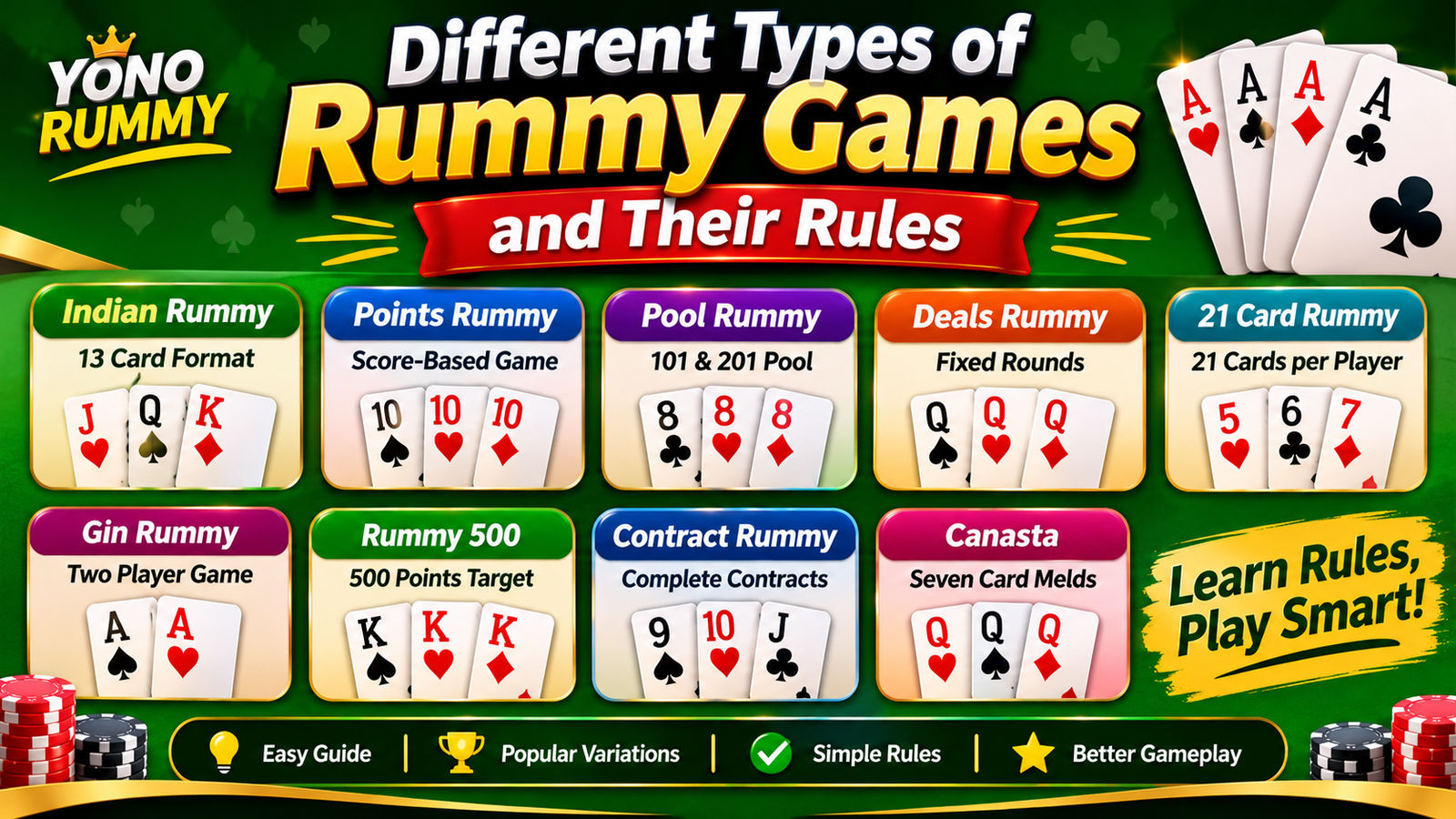
Indian Rummy India mein popular traditional card games mein se ek hai. Is game mein players ko apne cards ko smartly arrange karke valid sequences aur sets banane hote hain. Indian Rummy khelne ke liye basic rules, card combinations, joker usage aur gameplay process ko samajhna important hai.
Agar aap beginner hain aur Indian Rummy ke baare mein detail mein jaana chahte hain, toh is guide mein aapko 13 Card Rummy rules, Pure Sequence, Impure Sequence, Sets, Joker cards, scoring system aur valid declaration ke baare mein complete information milegi.
What Is Indian Rummy?
Indian Rummy ek card game hai jisme generally 2 se 6 players participate kar sakte hain. Iske popular 13-card format mein har player ko 13 cards distribute kiye jaate hain. Players ka main objective apne cards ko valid sequences aur sets mein arrange karna hota hai.
Game ke dauraan players closed deck ya open discard pile se cards pick karte hain aur apne hand se unwanted cards discard karte hain. Is process ke through players required card combinations complete karne ki koshish karte hain.
Indian Rummy mein valid declaration ke liye minimum two sequences required hoti hain, jinmein se kam se kam ek Pure Sequence honi compulsory hai.
How to Play Indian Rummy?
Indian Rummy ka gameplay kuch basic steps par based hota hai. In steps ko samajhne se beginners ke liye game ke rules follow karna easy ho jata hai.
1. Card Distribution
Game start hone par har player ko generally 13 cards milte hain. Common format mein standard playing card decks aur jokers ka use hota hai. Players ki sankhya ke according one ya multiple decks use kiye ja sakte hain.
2. Understand the Closed and Open Deck
Indian Rummy mein cards pick karne ke liye generally do options hote hain:
- Closed Deck: Ye face-down cards ka pile hota hai, jahan se player randomly ek card draw karta hai.
- Open Deck: Ye face-up discarded cards ka pile hota hai, jahan se player top available card choose kar sakta hai.
3. Pick and Discard Cards
Har turn mein player ek card draw karta hai aur apne hand se ek unwanted card discard karta hai. Is process ko repeat karke players apne required sequences aur sets complete karte hain.
4. Arrange Valid Card Combinations
Players ko apne 13 cards ko valid sequences aur sets mein arrange karna hota hai. Ismein Pure Sequence, Impure Sequence aur Set important combinations hain.
5. Make a Valid Declaration
Jab player ke cards valid combinations mein arrange ho jaate hain, toh woh declaration kar sakta hai. Declaration se pehle sabhi card groups ko properly verify karna important hai.
Types of Card Combinations in Indian Rummy
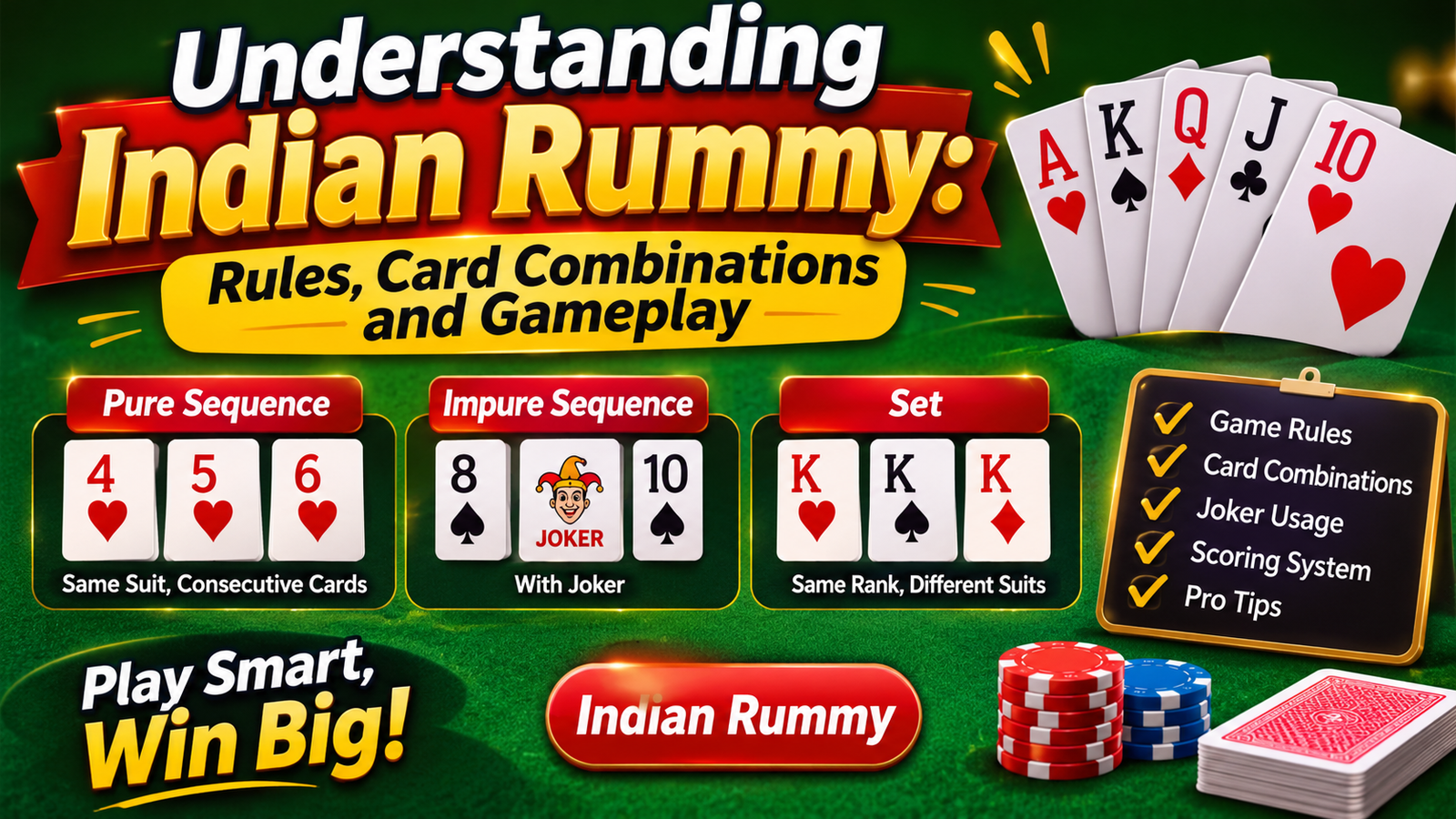
Indian Rummy mein card combinations ko samajhna sabse important hai. Common 13-card format mein three important combinations hote hain: Pure Sequence, Impure Sequence aur Set.
1. Pure Sequence in Rummy
Pure Sequence same suit ke minimum three consecutive cards ka group hota hai. Is combination mein kisi missing card ko replace karne ke liye joker use nahi kiya ja sakta.
Examples of Pure Sequence:
- 4♥, 5♥, 6♥
- 7♠, 8♠, 9♠
- 10♦, J♦, Q♦, K♦
In sabhi examples mein cards same suit ke hain aur consecutive order mein arranged hain.
Pure Sequence valid declaration ke liye compulsory hoti hai. Isliye players ko apne cards arrange karte waqt is combination ko priority deni chahiye.
2. Impure Sequence in Rummy
Impure Sequence same suit ke consecutive cards ka group hota hai jisme missing card ki jagah joker use kiya ja sakta hai.
Examples of Impure Sequence:
- 4♦, 5♦, Joker
- 8♠, Joker, 10♠
- 6♥, 7♥, 8♥, Joker
In examples mein joker missing card ko represent karta hai aur sequence complete karne mein help karta hai.
Impure Sequence valid combination hoti hai, lekin ye Pure Sequence ki jagah nahi le sakti.
3. Set in Rummy
Set mein same rank ke minimum three aur maximum four cards hote hain. Cards ke suits different hone chahiye.
Examples of Valid Sets:
- K♥, K♠, K♦
- 7♥, 7♠, 7♣
- Q♥, Q♠, Q♦, Q♣
Ek valid set mein same suit ke duplicate cards include nahi hone chahiye, even when multiple decks are used.
Joker ka use bhi missing card ko replace karne ke liye kiya ja sakta hai, subject to the applicable game rules.